

Exhibiting at an Art Fair: The Logistics Guide, from Stand to Return
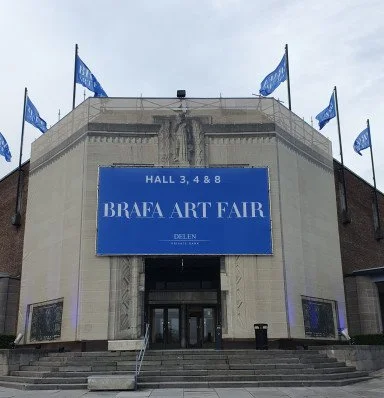
BRAFA 2026
An art fair plays out over a week, but its logistics take months to prepare. Fixed installation slots, customs formalities, sales to deliver, crates to store: every stage has its own timeline and its own pitfalls. With the major early-year fairs approaching, here is our guide to managing your artworks’ journey with confidence, from leaving the gallery to coming home.
Three to four months ahead: laying the groundwork
It all starts with a precise list of the works under consideration: dimensions, weight, insured value, specific fragilities and place of departure. Even if the final selection changes, this list lets your shipper estimate volumes, the number of crates and the type of vehicle needed.
This is also the time to read the fair’s technical regulations carefully. They set delivery slots, access dimensions and on-site handling constraints. Sharing them early with your shipper avoids many surprises.
Finally, check your insurance cover. A nail-to-nail policy covers the work from the moment it comes off the gallery wall until it is hung again, including transport, time on the stand and the return journey. Make sure declared values are up to date and that the full fair period, installation and dismantling included, is covered.
Crates designed for the journey there and back
A fair crate is not used just once: it leaves the gallery, waits during the event, then travels again, sometimes to a different destination. It must be sturdy, easy to reopen without risk to the work, and clearly identified.
A few good practices save precious time on site: a crate number matching your inventory, a clear indication of which side opens, screwed rather than nailed closures, and a repacking sheet inside the lid. At dismantling, when everyone is packing at once and under pressure, these details make all the difference.
For lighter or less fragile works, high-quality soft packing may be enough and reduces the volume to store. The right choice depends on each piece, as we explained in our article on why not all art crates are equal.
Customs: plan ahead if you come from outside the EU
For a European gallery exhibiting within the Union, works move freely. For a gallery coming from the United Kingdom, Switzerland or elsewhere, each work enters EU territory and must go through a customs procedure.
Depending on whether the works are meant to return or to be sold on site, the customs regime and the treatment of import VAT will differ. The right choice depends on each work and should be prepared with your shipper.
These formalities require an accurate inventory, values consistent with invoices, and some time. It is best to start them several weeks before departure, with a shipper who knows the regulations specific to cultural goods.
Installation: it all happens within a time slot
At a major fair, dozens of exhibitors deliver at the same time. Organisers therefore assign precise slots for access to the loading dock. Arriving late can mean waiting several hours, or even losing your turn. Transport must be planned backwards from that slot, with a margin for traffic and entry checks.
Once on the stand, the works are unpacked and checked before hanging. If the gallery wishes, a condition report can be drawn up at that point: should damage be noticed later, it helps establish when and where it occurred.
Hanging then requires a trained team, the right equipment and a good understanding of the stand’s walls. Having a hanging plan approved in advance speeds up this stage considerably.
During the fair: empty crates and sales
One question is often overlooked: where do the empty crates go during the event? Stands almost never have room to keep them. They must be removed, stored somewhere safe and dry, then brought back at exactly the right moment for dismantling. A shipper with a warehouse close to the fair makes this step much simpler.
Sales bring their own logistics. A sold work may need to be replaced on the stand by another piece kept in reserve. The buyer’s delivery address, access constraints and installation wishes should also be collected quickly, so that the next steps can be organised without delay.
Dismantling and the return
Dismantling is often more intense than installation. It takes place over a very short time, right after the fair closes to the public, with all exhibitors on site at once. Crates must be delivered to the stand at the right moment, and the works taken down, checked and repacked with a new condition report.
Then comes the sorting: unsold works return to the gallery, while sold works go straight to their buyers, sometimes in several countries. Delivering a sale directly from the fair avoids an unnecessary round trip, extra handling and duplicate costs. If the buyer is not ready to receive the work, temporary storage allows you to wait for the right moment.
In short: your art fair checklist
List of works with dimensions, weights and values, three to four months ahead
Fair’s technical regulations shared with your shipper
Nail-to-nail insurance checked, installation and dismantling included
Numbered, reusable crates that are easy to reopen
Customs formalities started early for non-EU exhibitors
Delivery slot confirmed and hanging plan approved
Condition reports on arrival and departure
Empty crate storage arranged for the duration of the event
Buyers’ details collected at the time of sale
Sales deliveries and return of unsold works planned before dismantling
Do you have an upcoming exhibition? Learn more about our logistics services for trade shows and exhibitions, or request a quote.
Based in Brussels, with a warehouse in Drogenbos, we support galleries and dealers throughout the journey: custom crates, transport, formalities, crate storage during the fair and direct delivery of sales. Get in touch to discuss your project. Masterpieces don’t move themselves. We do.