

Why transporting works of art is becoming increasingly complex in an unstable geopolitical world
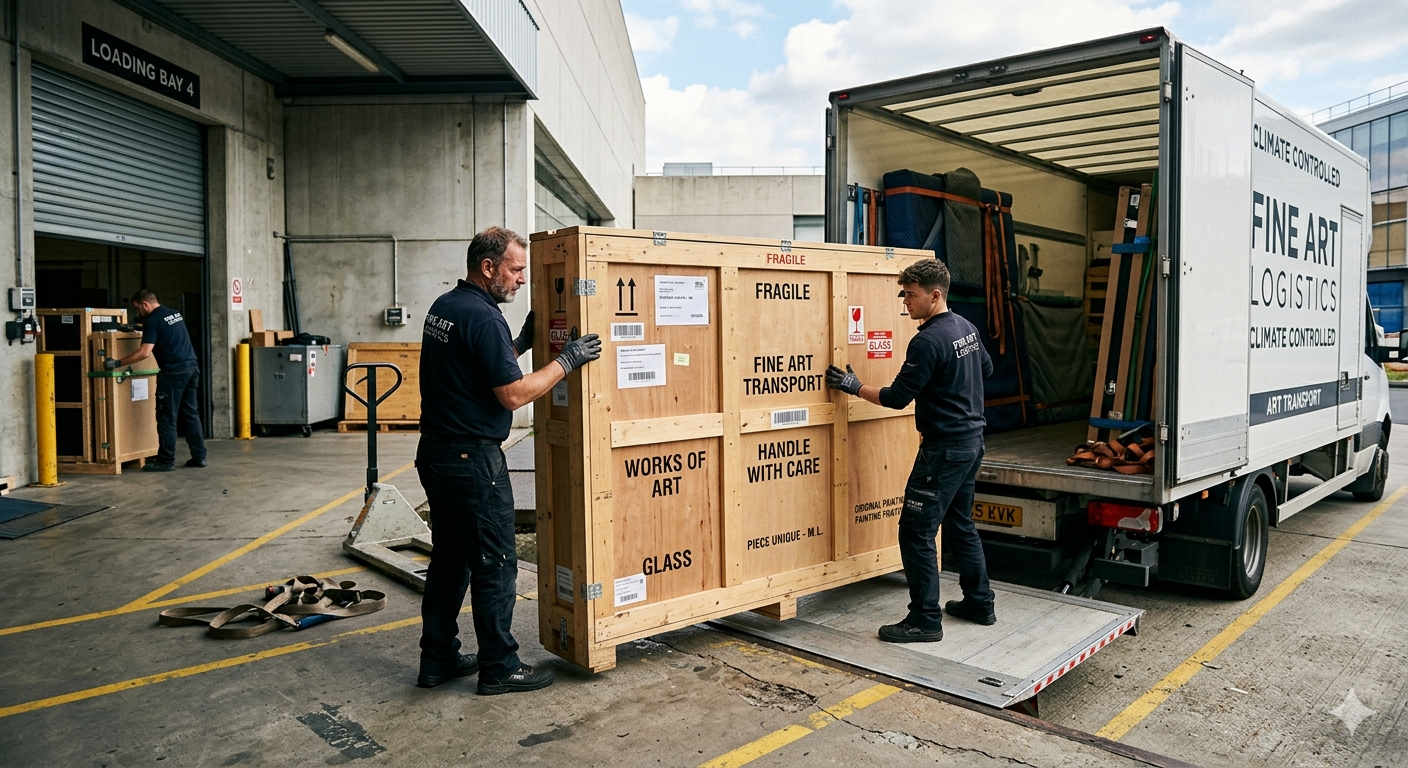
An analysis of the new logistical challenges affecting the global transport of works of art.
Transporting works of art has always been a delicate process. Today, it has become unpredictable.
As geopolitical tensions reshape global logistics flows, the movement of artworks—once meticulously orchestrated—is increasingly subject to uncertainty.
What is art transportation?
Art transportation refers to all operations related to the movement, handling, and storage of artworks under strictly controlled conditions, in order to ensure their integrity.
This includes, in particular:
specialized packaging
temperature-controlled transport
handling customs formalities
insurance and risk management
Unlike traditional logistics, it’s not just about moving an object, but about preserving its artistic, cultural, and financial value.
A historically complex ecosystem
Even under stable conditions, the transport of works of art involves a wide range of stakeholders:
galleries
collectors
insurers
customs authorities
specialized carriers
Every shipment requires careful coordination. Even the slightest delay or miscommunication can have significant consequences.
Another layer of complexity: geopolitics
Recent global developments have added an additional layer of complexity.
Airspace restrictions, changes to commercial routes, and regional instability: all of these factors have a direct impact on the transport of artworks.
Tensions in the Middle East, along with other international conflicts and imbalances, are leading to:
longer shipping times
a rise in costs
limited routing options
greater uncertainty
What used to be a well-controlled process is now becoming harder to predict.
The real issue: fragmentation
The art world relies on precision—but still operates largely through fragmented systems.
Information is scattered. Coordination is often done manually. Visibility is limited.
In a stable environment, this remained manageable. In the current context, it has become a risk factor.
Toward a New Approach to Art Transportation
In the face of this growing complexity, a transformation is taking place.
New solutions are emerging to streamline the transportation of artworks by centralizing information and improving coordination among the various stakeholders.
Arkshore's positioning
Masterpieces don’t move on their own. We do.
Arkshore was designed to streamline and coordinate the transport of artworks by bringing all stakeholders together within a structured environment.
By reducing fragmentation and improving communication, Arkshore enables galleries, collectors, and institutions to manage their shipments with greater control, visibility, and peace of mind—even in uncertain times.
Outlook
Geopolitical instability is not a temporary phenomenon. It is part of a long-term trend.
For the art world, this marks a major shift: logistics can no longer remain behind the scenes.
The future of art transportation will depend on transparency, coordination, and adaptability.
FAQ
What is art transportation?
This is the specialized process used to transport artworks while ensuring their physical safety and preserving their value.
Why is transporting artworks becoming more complicated?
Geopolitical tensions are disrupting logistics routes, driving up costs, and making delivery times less predictable.
What impact do conflicts have on art logistics?
They can restrict certain transport routes, complicate procedures, and introduce additional risks.
Who needs art transportation services?
Galleries, collectors, museums, and cultural institutions.
Are you facing challenges related to the transportation of artworks?
Let's talk about it: edouard@arkshore.com